
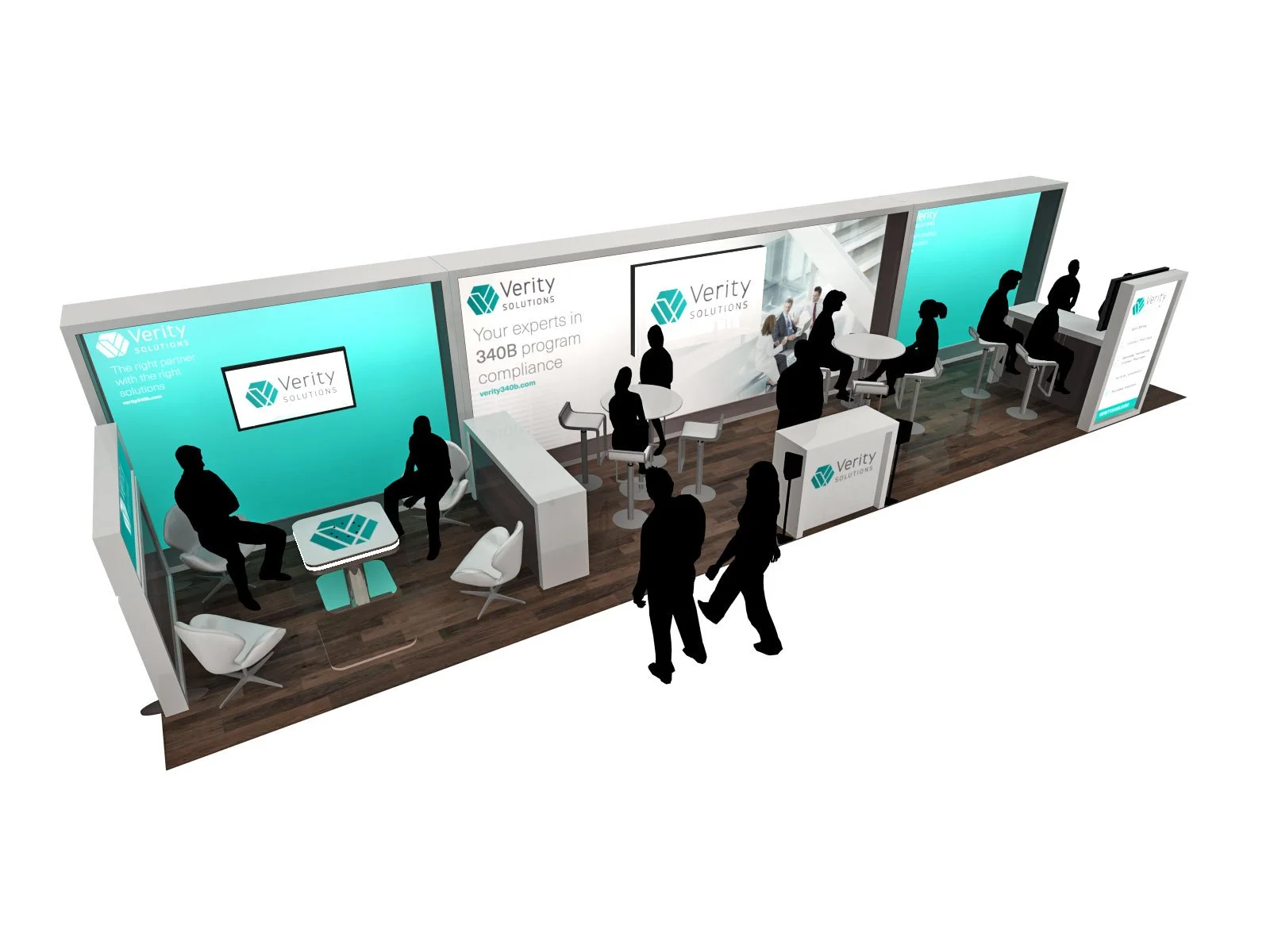
Backlit and LED displays do one thing exceptionally well: they make a booth read in a room that is fighting for attention. On a packed convention floor, ambient overhead lighting flattens printed graphics, and an illuminated panel or an LED wall is often the difference between a booth that resolves from down the aisle and one that disappears into the line of neighbors.
There are two distinct paths here, and they solve different problems. Backlit SEG light boxes are fabric graphics stretched over an edge-lit or back-lit frame, ideal for a clean, premium brand wall that stays bright and swaps easily. LED video walls are modular tiles that play motion, loop demos, and update content live, which suits product launches and high-traffic sponsor positions where the message needs to change through the day.
Nashville venues vary enough that the right answer is venue-specific. Music City Center publishes its own equipment and labor guidance, and rigging, power, and signal routing for an LED wall flow from the show manual. The Gaylord Opryland complex, with more than 700,000 square feet of meeting space, runs differently again, and an LED package that powers cleanly in the Ryman Exhibit Hall is planned around that property's electrical and labor posture rather than a generic spec.
Execution priorities
- Match the technology to the goal: backlit SEG for a bright static brand wall, LED tiles for motion and live content.
- Plan power load and circuit drops early, because LED walls and large light boxes draw more than a printed booth.
- Confirm rigging and ground-support rules for the specific venue before sizing any hanging or freestanding LED structure.
- Spec pixel pitch to the viewing distance so the wall looks sharp at aisle range, not pixelated up close.
- Build a content and signal plan, including a tech lead on-site, so the wall actually runs through show hours.
Backlit SEG light boxes
A backlit SEG light box is a tensioned fabric graphic over an LED-edge frame. The result is an even, glowing brand wall with no visible hardware seams, and the graphic pops out of the silicone edge and swaps in minutes. For exhibitors who want a premium, finished look without the cost and content overhead of video, this is usually the right tool.
Light boxes scale from a single backlit header on a 10x10 to a full backlit back wall on a 10x20 or island. Because the graphic is fabric, it packs small and ships light, which keeps freight reasonable. We plan the depth of the frame and the power feed so the unit installs cleanly within your booth footprint and the venue's electrical plan.
LED video walls
An LED video wall is built from modular tiles that lock into a frame, either ground-supported or hung where the venue allows rigging. The payoff is motion: looping product footage, live demos, social feeds, or sponsor content that changes through the day. On a high-traffic position, a moving wall stops more aisle traffic than any static graphic.
The two specs that matter most are pixel pitch and size. Pixel pitch is the distance between LEDs; a tighter pitch looks sharper up close but costs more, so we match it to how close attendees actually stand. We size the wall to the footprint and the sightline, then build the processing and signal chain behind it so content plays reliably from doors open to strike.
Power, rigging, and venue rules in Nashville
Illuminated and LED displays draw real power, and the order goes in well before move-in. We calculate the load, request the right circuits through the show's electrical contractor, and confirm whether the wall is ground-supported or rigged based on the venue's published rules. Music City Center's equipment and labor guidance governs that downtown; the Opryland halls and the various hotel ballrooms each have their own posture.
Rigging an LED wall overhead is not allowed everywhere and is never assumed. Where it is permitted, the rigging order, point loads, and motor plan are confirmed in writing through the show. Where it is not, we engineer a ground-supported structure that hits the same visual without fighting the venue's rules.
Choosing between backlit and LED
If your message is fixed and the goal is a bright, clean, premium brand presence, a backlit SEG wall delivers it for less money, less power, and far less on-site complexity than video. The graphic swaps between shows, and there is no content production to manage.
If your message needs to move, change through the day, or show a live product in action, an LED wall is worth the added power, freight, and signal work. Many Nashville exhibitors land on a hybrid: a backlit brand surround with a single LED window for the demo, which gets the motion where it counts without lighting up the entire budget.
Content, signal, and on-site tech support
An LED wall is only as good as the content and the signal chain feeding it. We help prep content at the wall's native resolution and aspect ratio so it fills the canvas without stretching, then build a redundant playback and processing setup so a single failure does not blank the wall in front of the aisle.
Through show hours, a tech lead stays with the package. Source switches, content updates, brightness adjustments as the room lighting changes, and any tile issue all get handled without pulling your team off the floor. For a launch or a sponsor position, that on-site coverage is what keeps the wall live when it matters.
Freight and reuse considerations
Backlit light boxes pack down small and travel easily, so they suit exhibitors running a regional Middle Tennessee circuit on a tight freight budget. LED tiles ship in roadcases and need careful handling, so we plan crating, weight, and drayage with the same discipline as the structure itself.
For owned LED inventory, a storage and maintenance plan keeps tiles, processors, and cabling show-ready between dates. For one-off or occasional needs, rental LED is usually the smarter path, and we size the rental to the show rather than carrying hardware you will not use again soon.
Why a local Nashville team helps
Lit displays fail in ways printed graphics do not: a dead circuit, a flickering tile, a processor that drops signal. With Trade Show Services of Nashville based in the market, replacement parts and a technician are a short drive from the floor rather than an overnight ship away.
Keeping the AV, the structure, and the install with one Nashville team also means the people who built the wall are the ones running it on-site. That continuity is how an illuminated or LED display stays reliable across a show week and across a season of Nashville events.
Frequently asked questions
What is the difference between a backlit display and an LED wall?
A backlit display is a printed fabric graphic lit from behind or the edge, giving an even glowing static image. An LED wall is built from light-emitting tiles that play motion and live content. Backlit is for a bright fixed brand wall; LED is for changing video.
How much power does an LED video wall need?
More than a printed booth, and it varies with wall size and brightness. We calculate the load and order the right circuits through the show's electrical contractor well before move-in so there are no power surprises on site.
Can I hang an LED wall over my booth in Nashville?
Only where the venue and show allow rigging, and never by assumption. Music City Center and the Opryland halls each publish rules. Where overhead rigging is not permitted, we engineer a ground-supported structure that achieves the same look.
What pixel pitch should I choose?
It depends on viewing distance. A tighter pitch looks sharper up close but costs more. For most trade show aisles, a mid-range pitch is sharp at the distance attendees actually stand. We spec it to your booth, not a generic number.
Should I rent or own an LED wall?
Rent for one-off or occasional Nashville shows. Owning only makes sense if you run LED frequently and can store and maintain the tiles, processors, and cabling between dates. We size the recommendation to your real calendar.
Who runs the wall during show hours?
A named tech lead stays with the LED package through show hours, handling source switches, content updates, brightness, and any tile issue. Backlit light boxes need far less on-site attention since there is no signal chain to manage.