
The downtown hotel market supports substantial conference and ballroom demand beyond the convention center itself. Teams looking at the station are usually trying to decide whether the job belongs in the core Nashville pattern or in a regional loop that includes hotel, venue, and travel conditions outside the immediate convention footprint.
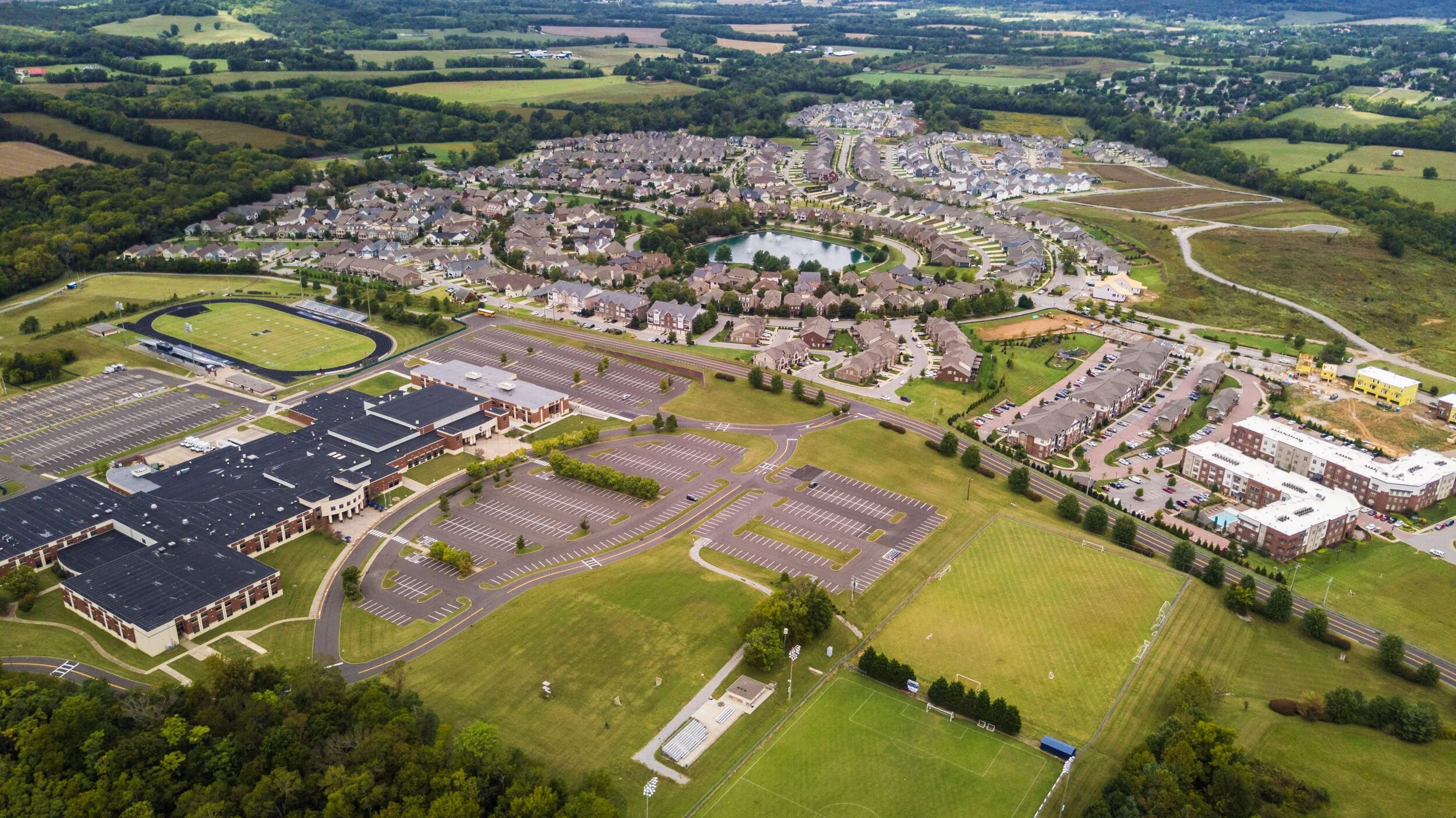
This city sits inside the Williamson County corridor cluster identified in the Nashville and Middle Tennessee market research. That is why the local brief has to account for venue mix, crew travel, hotel logistics, and outbound movement instead of treating every Middle Tennessee stop like the same delivery day.
Execution priorities
- Treat Thompson's Station as part of the Williamson County corridor network, not an isolated stop.
- Use drive time, hotel flow, and dock access to shape crew calls and client schedules.
- Plan outbound freight and next-day moves before show week compresses the calendar.
Trade show work in Thompson's Station
Thompson's Station falls inside the Nashville service footprint for trade show projects.
Production for the station shows starts with the same brief we run for the rest of Nashville: venue specifics, show dates, footprint, outcome. Freight paths and local vendor availability are the variables that shift from the city core.
The Nashville event landscape
Nashville is a working trade show market.
Trade show weeks in Nashville compress decisions.
Nashville venues we work
Grand Hyatt Nashville: it is located in the SoBro district adjacent to Music City Center.
Renaissance Nashville Hotel. It offers over 25,000 square feet of meeting and event space.
Operational rules on the Nashville floor
Nashville floor operations follow the venue's own manual.
Practically, that means pulling the current exhibitor manual for every show and confirming a handful of items in writing: which tasks the venue's house crews cover, which tasks the show's general contractor covers, and what an exhibitor or their appointed contractor can handle without escalation.
Scope in Thompson's Station
For programs that repeat, asset management becomes part of the engagement — storage, graphic rotation, refurbishment, and re-crating are planned rather than one-off.
Scope boundary is as important as scope inclusion.
What an engagement actually looks like
Everything downstream hinges on those answers.
Venue coordination comes next.
With venue details locked, production runs.
The install phase has one owner on the floor.
During show hours, the booth is a live operating space.
What it costs and how fast it moves
The levers that matter: build path (custom, rental, or hybrid), footprint, venue service fees, graphics, freight, and supervision days. A 10x10 turnkey rental and a 30x50 custom island with a double deck are entirely different projects.
A clean schedule starts 4 to 5 months out for custom work and 2 to 3 months for rentals. Shorter lead times are workable but push rush premiums and limit material choices.
Outcomes we optimize for
Exhibitors who measure programs seriously track leads, floor-booked meetings, and post-show pipeline. The build and the install are upstream inputs to those KPIs.
Client teams sometimes want the booth to carry the pipeline on its own, but the best-performing programs treat the booth as a platform and put real operators on it. On-floor conversation discipline moves the KPIs more than any scenic decision.
How we're built to run your project
The difference from a national vendor shows up at the dock.
Over a multi-show calendar, the compound value of a single team shows up in fewer surprises. The second install is faster than the first, the third is faster than the second, and by the fourth the project runs on memory and documentation rather than first-principles planning.
Frequently asked questions
Do you work at the Westin Nashville?
Yes. the hotel has 12 event rooms.
How much lead time is ideal?
Custom builds run best with 16 to 20 weeks of lead time. Rentals take 8 to 12 weeks.
What information kicks off a project?
The show, the venue, the booth number, the dates, and a target budget range. From those, an initial scope and a realistic cost come back within a few days.
Who runs the booth on-site?
One named show-site lead runs the install, the show hours, and the strike. That person carries the floor plan and the punch list from crates to doors and reports up once a day.
Can the booth travel to the next city on our calendar?
Same structure, swappable graphics, standard crates.
What happens if something breaks during show hours?
The on-site lead handles it.